
drainage solutions: rain gardens
- ElizabethFribush

- Feb 28, 2021
- 1 min read
Updated: Sep 1, 2021
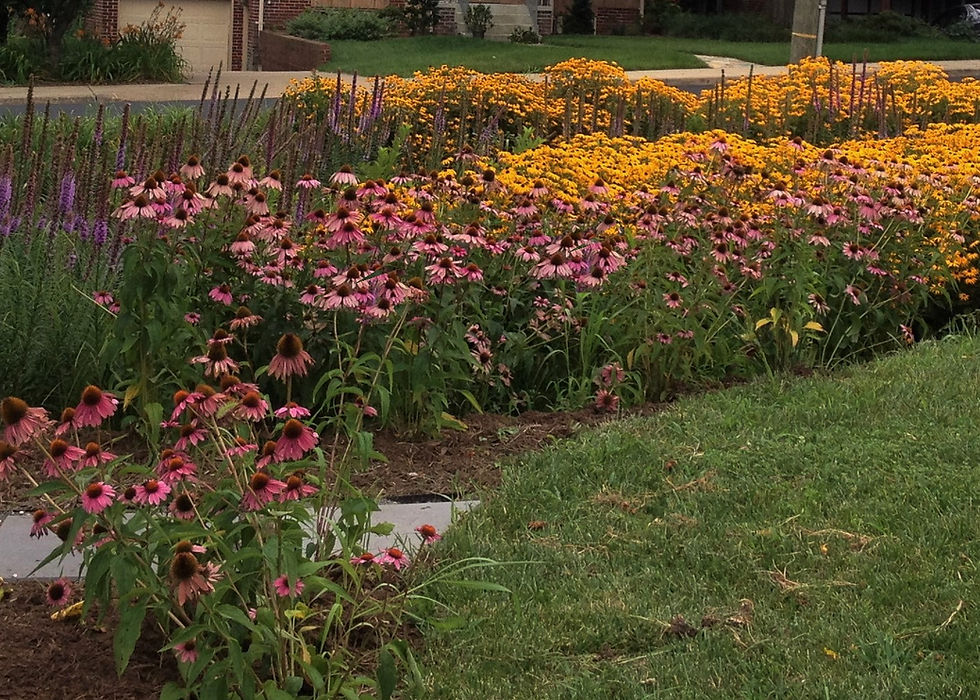
A rain garden may be a solution to address drainage issues in your yard. But as always, start by assessing the existing conditions; see blog "selecting the right drainage solution" If there are areas that cannot be drained by surface grading, then consider a series of solutions for individual areas on-site. such as adding a dry-stream, vegetated swales, installing a series of French drains or installing a rain garden. Each of these solutions is sustainable because it involves small solutions that allow small areas of drainage to be detained after a large storm and infiltrate (or slowly soak) into the ground.
A rain garden
allows water to slowly seep into the subgrade following a significant rain event. Rain gardens have surface plantings that are tolerant of both occasional inundation during and after rainfall events; as well as the drought conditions that are present for most of the time. A subsurface drainage pipe allows for excessive water volume to drain to an existing adequate outfall at an elevation below the elevation of the drain. Civil engineering design is required for a rain garden, in order to calculate water volumes, design the subsurface drainage system, and determine adequacy of the outfall. Because of the engineering design costs and the required subsurface construction costs, a rain garden would typically be a significantly higher cost solution than dry streams or series of French infiltration drains. Plants are selected carefully to meet the site conditions and to create a landscape feature with seasonal color and interest.. A conceptual detail for a rain garden from Fairfax County is shown below.

Comments